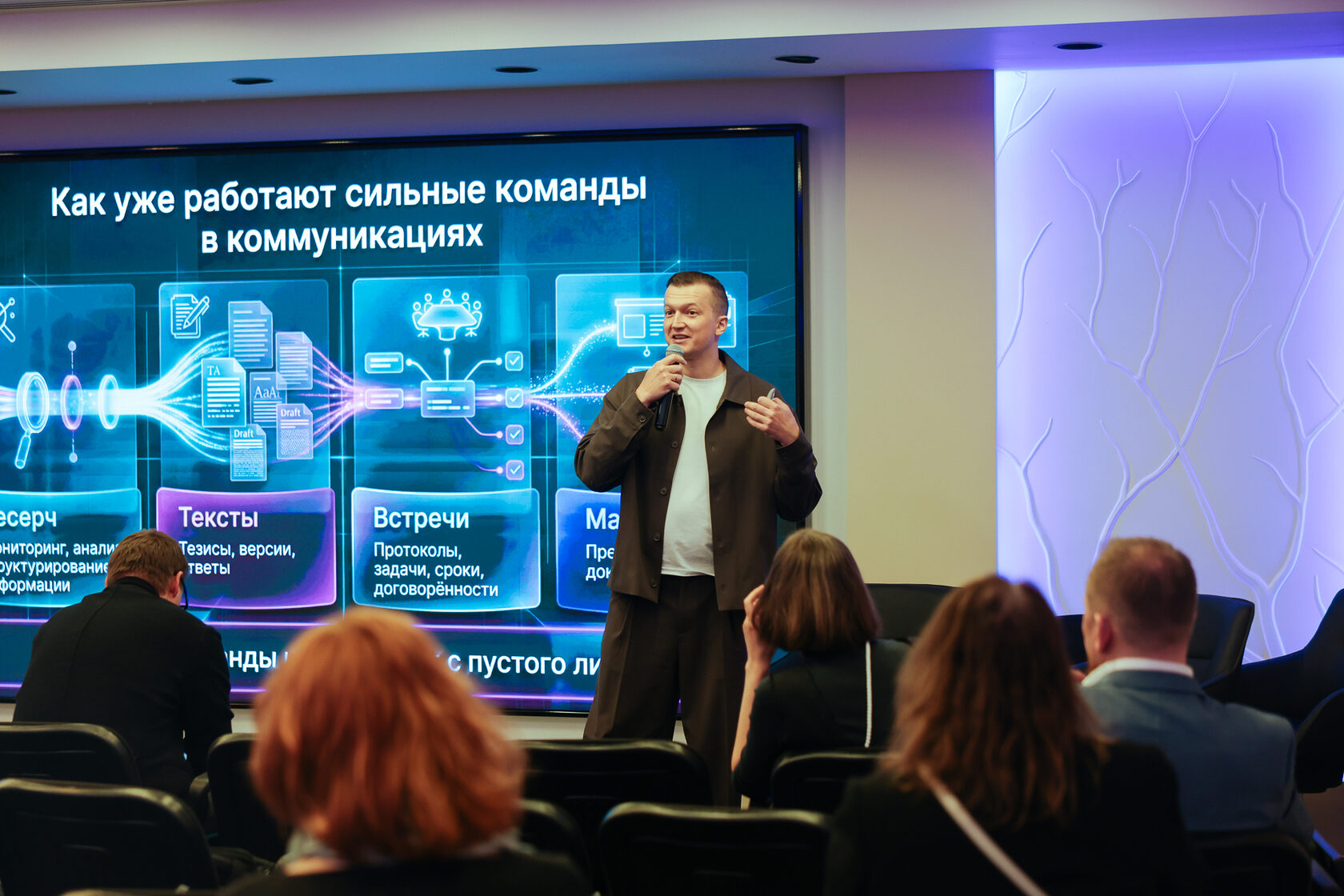
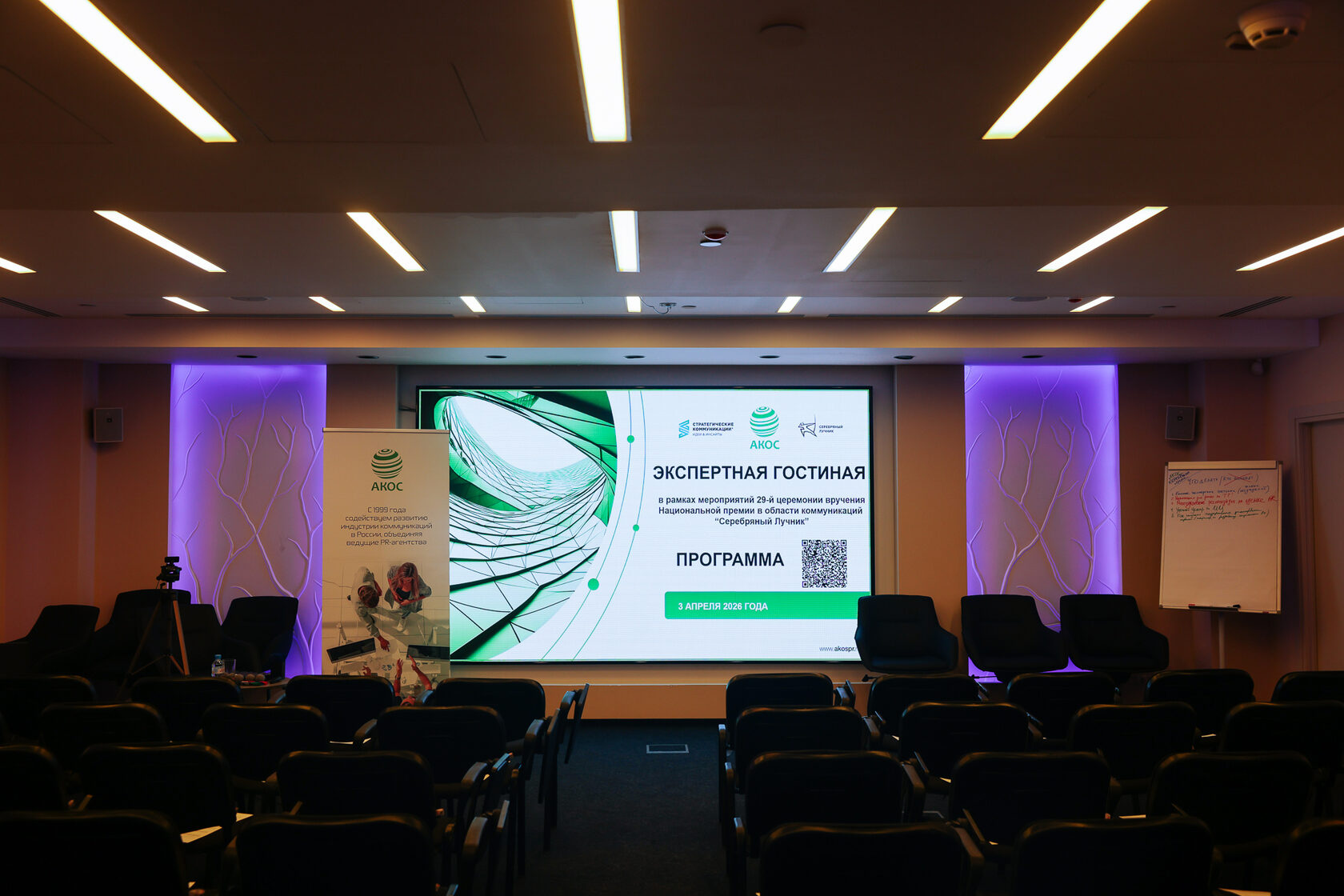
As part of the events surrounding the 29th "Silver Archer" Awards Ceremony, the Association of Public Relations Consultancy Companies (AKOS) brought together leading experts to analyze the current agenda in the field of communications. The meeting discussed key challenges, internal industry problems that are holding back market development, and strengths that should be leveraged by pooling the resources of various players and platforms. As a result, an internal roadmap was created for further discussions and for expanding the agenda of industry forums.
The meeting took place in the format of a discussion lounge with the participation of AKOS expert members and leaders of leading communications agencies; members of the AKOS Advisory Council — corporate communicators from large businesses, resource-type NGOs, and government bodies; representatives of industry communications associations (AKAR, AKMR, RASO, NAB); members of the Expert Council and regional project teams of the 2026 National Communications Award "Silver Archer"; and invited experts.
"Silver Archer is not only an award that showcases the best projects and ideas driving communications forward. It is a unique expert community representing the entire country," said Igor Pisarsky, Chairman of the Board of Directors of the R.I.M. communications agency and Chairman of the Board of Trustees of the Silver Archer Award. "This year, together with ACOS, we have launched a new tradition — within the framework of the 29th Silver Archer ceremony, we brought together experts and practitioners from the communications industry for a free, open, and thoughtful conversation about our common pain points and opportunities. The conversation was a success — it was relevant and useful. The experience of expert collaboration strengthens all parties involved. We will continue and invite everyone to join new discussions."
The meeting took place in the format of a discussion lounge with the participation of AKOS expert members and leaders of leading communications agencies; members of the AKOS Advisory Council — corporate communicators from large businesses, resource-type NGOs, and government bodies; representatives of industry communications associations (AKAR, AKMR, RASO, NAB); members of the Expert Council and regional project teams of the 2026 National Communications Award "Silver Archer"; and invited experts.
"Silver Archer is not only an award that showcases the best projects and ideas driving communications forward. It is a unique expert community representing the entire country," said Igor Pisarsky, Chairman of the Board of Directors of the R.I.M. communications agency and Chairman of the Board of Trustees of the Silver Archer Award. "This year, together with ACOS, we have launched a new tradition — within the framework of the 29th Silver Archer ceremony, we brought together experts and practitioners from the communications industry for a free, open, and thoughtful conversation about our common pain points and opportunities. The conversation was a success — it was relevant and useful. The experience of expert collaboration strengthens all parties involved. We will continue and invite everyone to join new discussions."
WHAT UNITES US
The development of the communications industry is driven by many factors, among which the role of internal industry linkages and mutual influence may still be underestimated. To strengthen this factor, it is essential to understand the common "vulnerabilities and deficits" outlined in the preamble to the discussion by Sergey Skripnikov, Director of Public Relations at RUSAL and Chairman of the AKOS Advisory Council.
The professional community — those who build connections, develop meanings, and construct trust — has paradoxically found itself in a situation where its own institutional framework does not appear strong. We have everything we need to address this: experts, competencies, and an understanding of shared problems. Yet what we lack is true "collective agency."
Why is this happening? Within the community, we are all very different, and these differences are not merely a matter of age, generation, or specialization. It is important to understand the environment in which each of us operates.
Corporate communicators live within company hierarchies and regulations. Government communicators face their own set of challenges and tasks related to achieving national goals while complying with all procedures. Agency businesses operate in an environment of shrinking budgets, intense competition, and talent shortages — a completely different rhythm and, to some extent, a different set of problems. In other words, we come from different environments and types of professional identity, with different success criteria and directions of travel.
To unite, we need to understand what we truly have in common. Perhaps that common ground lies in our shared vulnerabilities and shared deficits. The most fundamental ones.
First. There remains a serious deficit in the legitimacy of the profession, resulting in an unjustified decline in its status, which carries numerous risks — for example, communicators being excluded from strategic decision-making, underfunding, and rapid layoffs in times of upheaval.
Second. A lack of transparency and mutual trust within our sector — and toward it. Our complex and already large market suffers from a shortage of signals and quality validation tools that would be universally accepted, recognized, and understood — tools that would help explain what is truly high-quality and valuable.
Third. A serious problem with the reproduction of the industry and competencies within it. Tens of thousands of humanities students enroll in PR programs at various universities each year, despite extremely high competition for admission. Yet in reality: there is a shortage of people, and salary expectations do not match the skill level of graduates.
There is one more very important thing. Unlike many other professions, we are all closely interdependent because we are building a single environment for one another. This is the uniqueness of our sector: strength or weakness in one link transmits strength or weakness to another. For example, the weakening of agencies leads to a decline in service quality across the market; in the media segment, it leads to a shortage of professional authors and expert voices. If industry platforms weaken, we find ourselves with no place to come together to solve the industry's problems as a whole — and so on. And the reverse is also true.
And to truly unite, we don't need grandiose mega-projects or super-manifestos. What we need is a pragmatic approach and a shared, highly practical vision of the outcome: what we can gain by coming together on a particular issue or around a particular problem. The time has come for pragmatic "federations of interest" — where not everyone unites around everything, but rather around specific things, forming groups to address specific problems that truly matter to us. It's time to roll up our sleeves and build this dialogue.
The development of the communications industry is driven by many factors, among which the role of internal industry linkages and mutual influence may still be underestimated. To strengthen this factor, it is essential to understand the common "vulnerabilities and deficits" outlined in the preamble to the discussion by Sergey Skripnikov, Director of Public Relations at RUSAL and Chairman of the AKOS Advisory Council.
The professional community — those who build connections, develop meanings, and construct trust — has paradoxically found itself in a situation where its own institutional framework does not appear strong. We have everything we need to address this: experts, competencies, and an understanding of shared problems. Yet what we lack is true "collective agency."
Why is this happening? Within the community, we are all very different, and these differences are not merely a matter of age, generation, or specialization. It is important to understand the environment in which each of us operates.
Corporate communicators live within company hierarchies and regulations. Government communicators face their own set of challenges and tasks related to achieving national goals while complying with all procedures. Agency businesses operate in an environment of shrinking budgets, intense competition, and talent shortages — a completely different rhythm and, to some extent, a different set of problems. In other words, we come from different environments and types of professional identity, with different success criteria and directions of travel.
To unite, we need to understand what we truly have in common. Perhaps that common ground lies in our shared vulnerabilities and shared deficits. The most fundamental ones.
First. There remains a serious deficit in the legitimacy of the profession, resulting in an unjustified decline in its status, which carries numerous risks — for example, communicators being excluded from strategic decision-making, underfunding, and rapid layoffs in times of upheaval.
Second. A lack of transparency and mutual trust within our sector — and toward it. Our complex and already large market suffers from a shortage of signals and quality validation tools that would be universally accepted, recognized, and understood — tools that would help explain what is truly high-quality and valuable.
Third. A serious problem with the reproduction of the industry and competencies within it. Tens of thousands of humanities students enroll in PR programs at various universities each year, despite extremely high competition for admission. Yet in reality: there is a shortage of people, and salary expectations do not match the skill level of graduates.
There is one more very important thing. Unlike many other professions, we are all closely interdependent because we are building a single environment for one another. This is the uniqueness of our sector: strength or weakness in one link transmits strength or weakness to another. For example, the weakening of agencies leads to a decline in service quality across the market; in the media segment, it leads to a shortage of professional authors and expert voices. If industry platforms weaken, we find ourselves with no place to come together to solve the industry's problems as a whole — and so on. And the reverse is also true.
And to truly unite, we don't need grandiose mega-projects or super-manifestos. What we need is a pragmatic approach and a shared, highly practical vision of the outcome: what we can gain by coming together on a particular issue or around a particular problem. The time has come for pragmatic "federations of interest" — where not everyone unites around everything, but rather around specific things, forming groups to address specific problems that truly matter to us. It's time to roll up our sleeves and build this dialogue.
USEFUL INITIATIVES
Such a dialogue begins with initiatives that embed meaning and value in their very concept. AKOS, as an expert platform, is precisely focused on such initiatives. One current initiative was presented to the experts at the discussion lounge: the draft Code of Practices for Good-Faith Interaction between Clients and Contractors in the Communications Services Market. The Association, which represents contractors, is developing this Code in close cooperation with the ACOS Advisory Council and representatives of clients from various segments.
The Code is one way to increase awareness of the specific nature of communications services and their procurement — namely, the intellectual, creative, and inventive component of these services. The weight of this component is not formally prescribed but is shaped by a combination of specific conditions (context, strategy, goals, etc.). This specificity makes it impossible to purchase communications services on the same principles as tangible, standard goods (the "construction materials procurement logic") or to rely solely on price criteria when determining winners of procurement procedures.
The draft Code describes typical scenarios in the interaction between clients and contractors and, based on specific criteria, classifies them as organizationally improper (leading to resource losses for both parties), as well as directly into good-faith practices (e.g., characteristics of transparent competitive procedures) and bad-faith practices (e.g., signs of non-transparent competitive procedures). In this effort, ACOS acts as an analyst and verifier, gathering market practices and structuring them according to this principle. Separately, an understanding is being developed of how to apply the Code's principles in practice: how to analyze progress, identify bad-faith practices, and properly inform the market about them.
Another example is an AKOS initiative aimed at supporting professional regional PR agencies and developing the communications market as a whole. The initiative was presented by Lilia Miller, Partner at GREATIVE Agency and Head of the Committee for Promoting Standards at AKOS.
"We believe this project is timely for several reasons," said Lilia Miller. "There is clear demand for well-structured communications from businesses, including regional ones, as well as from local authorities. Due to the geopolitical situation, the focus has shifted to internal capabilities, and increasing attention is being paid to territory branding and promotion. This is further supported by the decentralization of business: major industrial and extractive companies are investing in the development of the regions where they operate. Federal players need regional expertise, while local players need federal expertise. Regional agencies are making themselves heard more and more."
As part of its regional program, AKOS plans to launch an open resource on its website featuring regional agencies that publicly join the initiative. Such a resource will help present a more comprehensive map of the market and its state: federal players (both agencies and businesses) will be able to find reliable local contractors, while regional agencies will gain access to new projects and expertise. Regional agencies will have the opportunity to develop in line with universally accepted industry standards and will expand their chances of securing contracts from large federal businesses and federal PR agencies. Businesses and federal agencies will gain a better understanding of the regional market and will be able to enlist on-the-ground support from trusted local players, which will help reduce logistical costs when organizing communications campaigns in the regions, facilitate the exchange of experience and expertise, and improve understanding of local specifics.
AKOS has announced the launch of a survey-study of regional agencies. The survey will help build a database of leading regional agencies by identifying their experience working with federal contractors, their knowledge of industry standards, and their readiness for collaboration. The survey results will also enhance understanding of the needs that regional communicators have regarding federal expert platforms.
The concept of ACOS's regional initiative was commented on by Yulia Deeva, former head of the gold mining company POLYUS and member of the AKOS Advisory Council; Anna Aizenshtadt, Director of the agency AGT-Volga Region; and Egor Egoshin, Director of the agency AGT-Siberia.
While acknowledging the active stance of leading regional agencies that offer high-quality communication services, the creative potential of specialists working in the regions, and the growing expansion of strong regional projects (including those presented at the Silver Archer Award platform), federal experts noted the problem of isolation and fragmentation of the regional agenda in communications and media. This is most often due to a lack of local resources, insufficient industry expertise, and the absence of a unified information space shared with major federal players.
In this sense, the "non-silent" regions stand out favorably — those that maintain connections with various expert platforms, participate in joint expert discussions, respond quickly to trends, demonstrate an understanding of modern standards and norms, and have their own ambassadors and expert communicators. A major role is also played by the presence — and genuine interest in quality results — of strong regional businesses and other qualified purchasers of communication services.
AKOS's regional initiative will be useful if it reflects these and other distinctive features, includes practical components, and takes into account mutual interests and opportunities for expert exchange.
Such a dialogue begins with initiatives that embed meaning and value in their very concept. AKOS, as an expert platform, is precisely focused on such initiatives. One current initiative was presented to the experts at the discussion lounge: the draft Code of Practices for Good-Faith Interaction between Clients and Contractors in the Communications Services Market. The Association, which represents contractors, is developing this Code in close cooperation with the ACOS Advisory Council and representatives of clients from various segments.
The Code is one way to increase awareness of the specific nature of communications services and their procurement — namely, the intellectual, creative, and inventive component of these services. The weight of this component is not formally prescribed but is shaped by a combination of specific conditions (context, strategy, goals, etc.). This specificity makes it impossible to purchase communications services on the same principles as tangible, standard goods (the "construction materials procurement logic") or to rely solely on price criteria when determining winners of procurement procedures.
The draft Code describes typical scenarios in the interaction between clients and contractors and, based on specific criteria, classifies them as organizationally improper (leading to resource losses for both parties), as well as directly into good-faith practices (e.g., characteristics of transparent competitive procedures) and bad-faith practices (e.g., signs of non-transparent competitive procedures). In this effort, ACOS acts as an analyst and verifier, gathering market practices and structuring them according to this principle. Separately, an understanding is being developed of how to apply the Code's principles in practice: how to analyze progress, identify bad-faith practices, and properly inform the market about them.
Another example is an AKOS initiative aimed at supporting professional regional PR agencies and developing the communications market as a whole. The initiative was presented by Lilia Miller, Partner at GREATIVE Agency and Head of the Committee for Promoting Standards at AKOS.
"We believe this project is timely for several reasons," said Lilia Miller. "There is clear demand for well-structured communications from businesses, including regional ones, as well as from local authorities. Due to the geopolitical situation, the focus has shifted to internal capabilities, and increasing attention is being paid to territory branding and promotion. This is further supported by the decentralization of business: major industrial and extractive companies are investing in the development of the regions where they operate. Federal players need regional expertise, while local players need federal expertise. Regional agencies are making themselves heard more and more."
As part of its regional program, AKOS plans to launch an open resource on its website featuring regional agencies that publicly join the initiative. Such a resource will help present a more comprehensive map of the market and its state: federal players (both agencies and businesses) will be able to find reliable local contractors, while regional agencies will gain access to new projects and expertise. Regional agencies will have the opportunity to develop in line with universally accepted industry standards and will expand their chances of securing contracts from large federal businesses and federal PR agencies. Businesses and federal agencies will gain a better understanding of the regional market and will be able to enlist on-the-ground support from trusted local players, which will help reduce logistical costs when organizing communications campaigns in the regions, facilitate the exchange of experience and expertise, and improve understanding of local specifics.
AKOS has announced the launch of a survey-study of regional agencies. The survey will help build a database of leading regional agencies by identifying their experience working with federal contractors, their knowledge of industry standards, and their readiness for collaboration. The survey results will also enhance understanding of the needs that regional communicators have regarding federal expert platforms.
The concept of ACOS's regional initiative was commented on by Yulia Deeva, former head of the gold mining company POLYUS and member of the AKOS Advisory Council; Anna Aizenshtadt, Director of the agency AGT-Volga Region; and Egor Egoshin, Director of the agency AGT-Siberia.
While acknowledging the active stance of leading regional agencies that offer high-quality communication services, the creative potential of specialists working in the regions, and the growing expansion of strong regional projects (including those presented at the Silver Archer Award platform), federal experts noted the problem of isolation and fragmentation of the regional agenda in communications and media. This is most often due to a lack of local resources, insufficient industry expertise, and the absence of a unified information space shared with major federal players.
In this sense, the "non-silent" regions stand out favorably — those that maintain connections with various expert platforms, participate in joint expert discussions, respond quickly to trends, demonstrate an understanding of modern standards and norms, and have their own ambassadors and expert communicators. A major role is also played by the presence — and genuine interest in quality results — of strong regional businesses and other qualified purchasers of communication services.
AKOS's regional initiative will be useful if it reflects these and other distinctive features, includes practical components, and takes into account mutual interests and opportunities for expert exchange.
MEDIA TRENDS
The thematic track "Media Trends" was built around the results of an AKOS study analyzing key development directions in the media industry in 2025. This is an annual industry study that has been tracking the transformation of media through the opinions and expertise of leading professionals — journalists and communications specialists — since 2022.
In 2025, more than 500 experts took part in the study. In the first stage, six focus groups and creative sessions were conducted, resulting in a list of 17 major trends. In the second stage, a large-scale online survey of journalists and communications professionals was carried out to identify the top 5 trends.
Top 5 Media Trends:
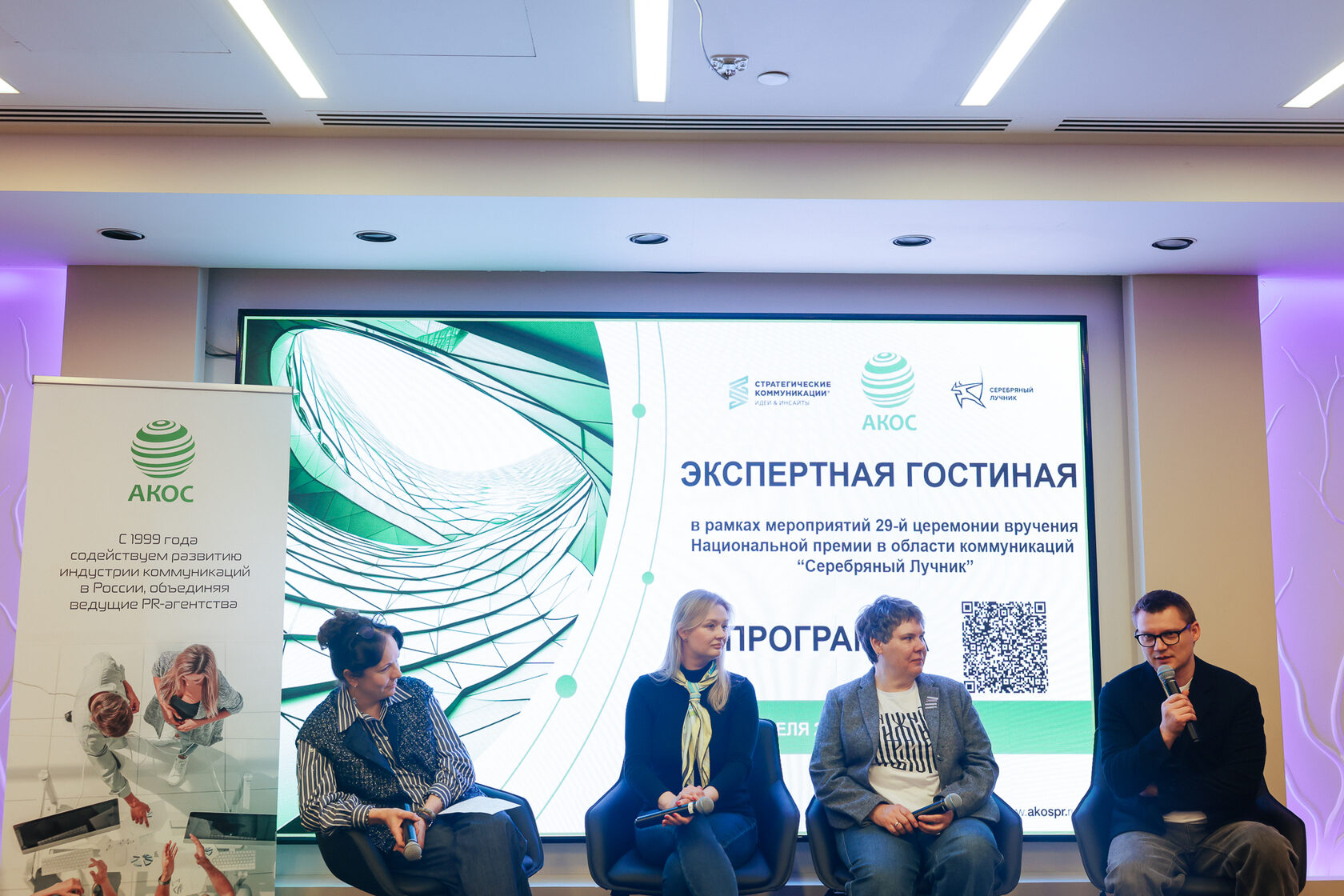
The trends, methodological specifics, and prospects for the next phase of the study were presented by Evgenia Nemchinova, Managing Partner of PR-Consulta and Head of AKOS's Media Relations Committee, and Lilia Glazova, CEO of PR News, member of the AKOS Board, and Head of AKOS's Committee on Industry Research and Rankings. They invited the track's experts — Victoria Dzhigkaeva, Director of External Communications at Rambler&Co; Roman Bedretdinov, Editor-in-Chief of Sostav and author of the Telegram channel "Fallen Leaves"; Inessa Savich-Tereshchenko, Deputy Head of the Information and Media Relations Department (Press Service) of the Federation Council of the Federal Assembly of the Russian Federation and member of the AKOS Advisory Council; Vadim Kovalev, Advisor to the General Director of Ural Steel Management Company, Chairman of the Public Chamber of the City of Moscow, and member of the AKOS Advisory Council — to comment on whether and how these trends are influencing their practices.
Victoria Dzhigkaeva, Director of External Communications at Rambler&Co
The thematic track "Media Trends" was built around the results of an AKOS study analyzing key development directions in the media industry in 2025. This is an annual industry study that has been tracking the transformation of media through the opinions and expertise of leading professionals — journalists and communications specialists — since 2022.
In 2025, more than 500 experts took part in the study. In the first stage, six focus groups and creative sessions were conducted, resulting in a list of 17 major trends. In the second stage, a large-scale online survey of journalists and communications professionals was carried out to identify the top 5 trends.
Top 5 Media Trends:
- Fragmentation/Chaoticization of media consumption
- Crisis of trust and quality
- Controlled media environment and its juridification
- Culture of editorial safety
- Routinization of AI: a tool, not a replacement
The trends, methodological specifics, and prospects for the next phase of the study were presented by Evgenia Nemchinova, Managing Partner of PR-Consulta and Head of AKOS's Media Relations Committee, and Lilia Glazova, CEO of PR News, member of the AKOS Board, and Head of AKOS's Committee on Industry Research and Rankings. They invited the track's experts — Victoria Dzhigkaeva, Director of External Communications at Rambler&Co; Roman Bedretdinov, Editor-in-Chief of Sostav and author of the Telegram channel "Fallen Leaves"; Inessa Savich-Tereshchenko, Deputy Head of the Information and Media Relations Department (Press Service) of the Federation Council of the Federal Assembly of the Russian Federation and member of the AKOS Advisory Council; Vadim Kovalev, Advisor to the General Director of Ural Steel Management Company, Chairman of the Public Chamber of the City of Moscow, and member of the AKOS Advisory Council — to comment on whether and how these trends are influencing their practices.
Victoria Dzhigkaeva, Director of External Communications at Rambler&Co
- AI is changing the economics of content consumption. This is precisely about routine: creating evergreen content or situational digests, reworking primary sources, or translating content into multiple languages. Thanks to this, editorial teams are finally returning to what they do best: creating exclusives, finding potentially interesting stories, and conducting in-depth investigations. AI is not replacing journalism — it frees up journalists' hands and refocuses them from quantity to quality. In 2026, AI will cease to be a "tool for routine" and will become an analytical partner and advisor. We are moving from requests like "come up with a headline" or "write a draft press release/news story from the available facts" to requests like "analyze which media outlets this story would work best in" and "draft a crisis response for three different audiences."
- The trend toward fragmentation of media consumption is influencing editorial work, and this is already the second wave. The first wave occurred when people consumed content chaotically across different channels, then they established some system of trusted sources — some mixed them, but everyone had their own stable pool. The second wave has been triggered by blocks and restrictions.
- The controlled media environment is linked to the culture of editorial safety. Self-censorship is not a new phenomenon, and it is intensifying under the dual pressure of the state and business, as well as due to the large number of complex and difficult-to-interpret legislative initiatives. How to work effectively in the current media reality? Build relationships with lawyers as closely as you do with partners and journalists.
DIGITAL TRENDS
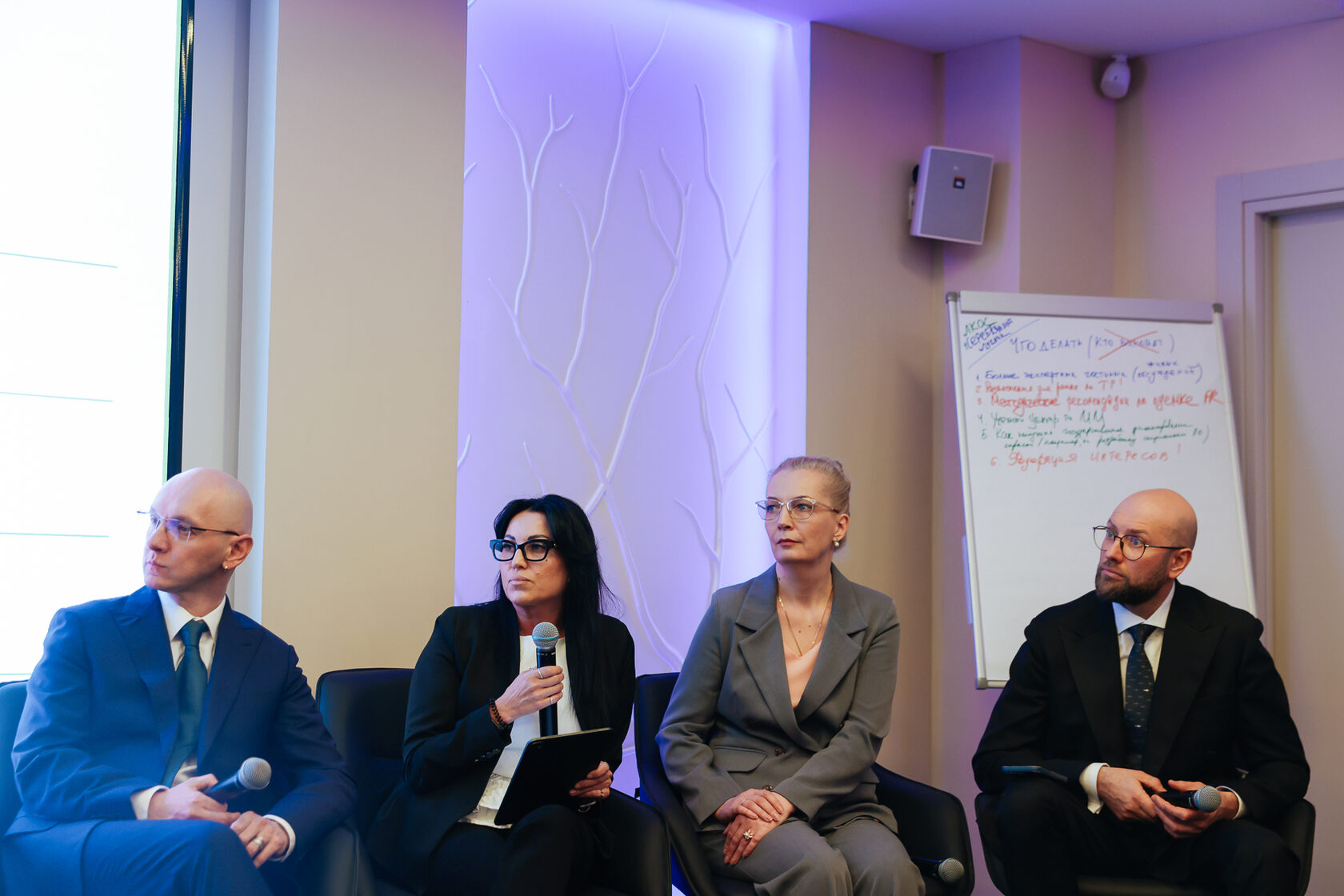
The experts for the track dedicated to digital trends were Maria Mezentseva, Advisor to the Minister and Head of the Press Service of the Ministry of Digital Development, Communications and Mass Media of the Russian Federation; Olga Bereк, President of the National Association of Bloggers; Valery Sidorenko, CEO of the R.I.M.-Interium Communications Group, member of the AKOS Board, member of the Public Council under the Ministry of Digital Development, Head of ACOS's Digital Communications Committee, and author of the Telegram channel "Digital & Tradition"; and Maxim Alekseev, General Director of the Discourse Group.
"Take a look at the current state of communications. There is a feeling that the industry has split in two. On one hand — complete confusion, tactical blindness, desperate attempts to keep breathing. On the other — unprecedented mobilization and a surge of energy we haven't experienced in years. An impulse to return to the essence. Because public relations is about meaning-making strategies — everything else is just tools. But here is the question: are we still maintaining that strategic approach today? Is our 'vision' working in real time? Or have we become hostages to the steering wheel, moving in small steps from one restriction to another, from one blocking to the next? Are we still strategists, or have we become tactical hamsters on a wheel? And most importantly — how exactly are we holding onto (or losing) the vertical of meaning when the horizontal digital landscape is shifting beneath our feet?"
(Yaroslav Fedoseev, Head of Strategic Communications at the NTIFoundation, author of the Telegram channel "Worse than Fedoseev", member of the AKOS Advisory Council, track moderator)
In response to these challenging questions, the track experts noted the following:
Maria Mezentseva, responding to a question about the future of digital communications, emphasized that we will need to seek new creative approaches to working with audiences. People will no longer be concentrated on a single platform; some will return to traditional websites, search engines, and new AI tools — in her view, this is where the nearest-term trends will manifest themselves.
The experts for the track dedicated to digital trends were Maria Mezentseva, Advisor to the Minister and Head of the Press Service of the Ministry of Digital Development, Communications and Mass Media of the Russian Federation; Olga Bereк, President of the National Association of Bloggers; Valery Sidorenko, CEO of the R.I.M.-Interium Communications Group, member of the AKOS Board, member of the Public Council under the Ministry of Digital Development, Head of ACOS's Digital Communications Committee, and author of the Telegram channel "Digital & Tradition"; and Maxim Alekseev, General Director of the Discourse Group.
"Take a look at the current state of communications. There is a feeling that the industry has split in two. On one hand — complete confusion, tactical blindness, desperate attempts to keep breathing. On the other — unprecedented mobilization and a surge of energy we haven't experienced in years. An impulse to return to the essence. Because public relations is about meaning-making strategies — everything else is just tools. But here is the question: are we still maintaining that strategic approach today? Is our 'vision' working in real time? Or have we become hostages to the steering wheel, moving in small steps from one restriction to another, from one blocking to the next? Are we still strategists, or have we become tactical hamsters on a wheel? And most importantly — how exactly are we holding onto (or losing) the vertical of meaning when the horizontal digital landscape is shifting beneath our feet?"
(Yaroslav Fedoseev, Head of Strategic Communications at the NTIFoundation, author of the Telegram channel "Worse than Fedoseev", member of the AKOS Advisory Council, track moderator)
In response to these challenging questions, the track experts noted the following:
- Thorough expert work is underway on public platforms. Industry experts and associations are represented in discussions on the modern regulation of digital communications, including the most pressing issues of blocks, deepfakes, AI, and others. There are several centers of influence, and experts and businesses hold different positions. However, there are common platforms for dialogue in which it is necessary — and possible — to participate thoughtfully and patiently.
- Relevant international experience is being analyzed and actively implemented, taking into account well-known trends (AI, direct communications, public opinion, transparency, etc.). However, the problem of forming a national brand and Russia's reputation in a digitally uneven space subject to multidirectional influences remains acute and insufficiently addressed.
- The digital landscape is increasingly influenced by the need to balance security (compliance with all modern regulatory requirements) with effectiveness, which presupposes a certain degree of freedom in creating exclusive content.
- There is a growing "trend toward truth" and person-to-person communication — unofficial positions, direct comments, and personal interpretations from individuals whose opinions are authoritative, interesting, or trustworthy (for example, bloggers) — as well as a "trend toward authorial intuition," the intuition of creators capable of maintaining an emotional connection with their audience and its trust, as opposed to AI-generated content.
- Audiences are fragmenting, and with them, effectiveness is fragmenting. Platforms that were once undisputed leaders are ceasing to be the sole points of communication, while new communities on other platforms have not yet formed. This disorients businesses and freezes investments: businesses do not understand where to operate, where their consumers are, or how to build relationships with bloggers on new platforms. To restore this balance, new platforms need to develop tools and high-quality functionality, after which communities will emerge and advertiser money will follow.
- The replacement of previously familiar foreign platforms with Russian digital ones is complicated by the non-market logic driving many processes. There are technical shortcomings, architectural problems with new projects, and growing pains that will be resolved. A period of testing is underway, and there are various fears and prejudices that need to be addressed professionally. At the same time, new market niches are opening up, offering opportunities to develop them quickly while simultaneously influencing their evolution (including by providing analytics and comparative needs assessments). These niches generate strong audience engagement and ensure rapid growth. A competition for content is beginning, and here market metrics are already at work.
Maria Mezentseva, responding to a question about the future of digital communications, emphasized that we will need to seek new creative approaches to working with audiences. People will no longer be concentrated on a single platform; some will return to traditional websites, search engines, and new AI tools — in her view, this is where the nearest-term trends will manifest themselves.
GR TRENDS
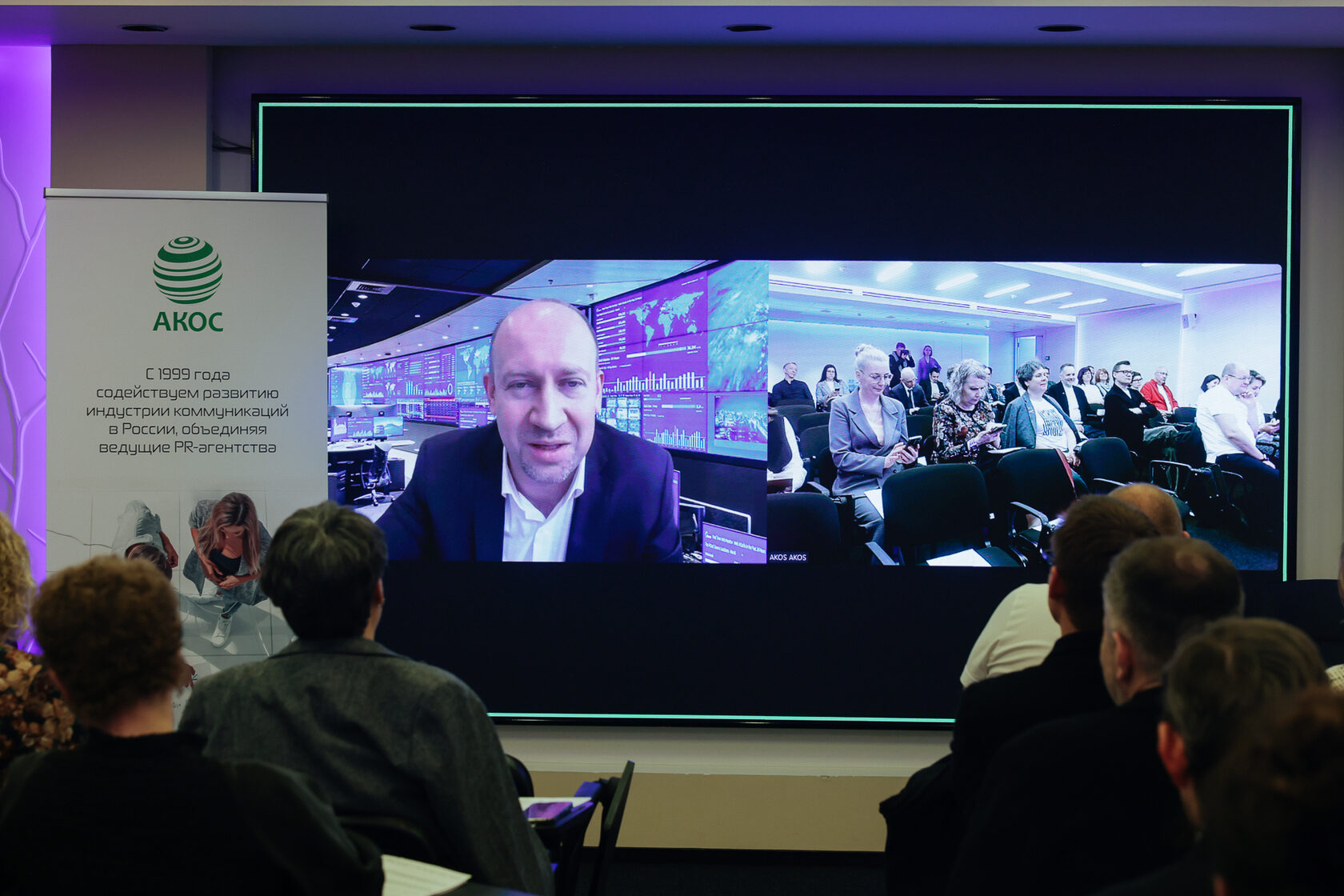
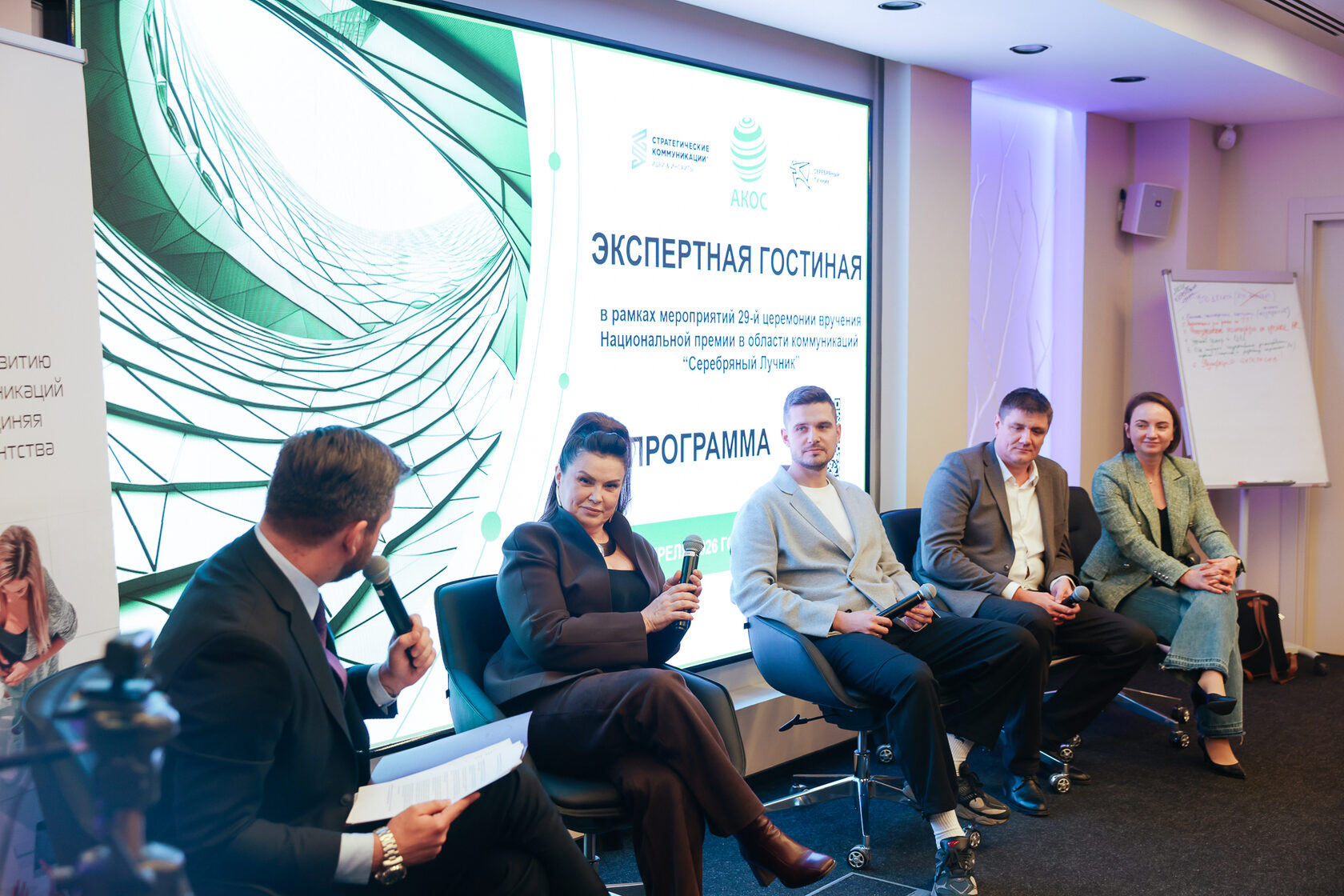
Andrey Lapshov, Chairman of AKOS and President of the Insidres Communications Group, linked the "GR Trends" track to the preamble of the expert meeting — the interconnections and mutual influence within the communications market, with an emphasis on cooperation between expert platforms — noting the value and necessity of pooling resources, mutually reinforcing expertise, and forging a common agenda.
Vyacheslav Lashchevsky, Chairman of the Board of Directors of AGT, Co-Chair of the Coordinating Council for Communications Industries under the Public Chamber of the Russian Federation, and Head of AKOS's Committee on Development and Interaction with Industry Associations, stated that he considers the following priority tasks for the development of the communications industry: supervision of the communications industry by a responsible federal executive authority; inclusion of communications industries in the list of creative industries; development and introduction of OKVED codes for all types of communication activities; updating the Federal State Educational Standard for Higher Education; establishing the academic field of "Communication Sciences"; developing and approving a Concept for Promoting the Development of the Communications Industry through 2030; and developing professional standards for the communications industry.
"Communications are an economic sector. The volume of our market is 2 trillion rubles per year (1% of GDP). We deserve state recognition; our status is strategic, and we need state support. Without this, it is much harder to develop the industry and overcome the perception of it as a mere service tool," noted Vyacheslav Lashchevsky. "In recent years, we have done a great deal to gain recognition and be taken seriously. But we need a state mandate for strategic communications to develop as a system."
Numerous examples of joint industry initiatives — involving participation in work on draft laws, regulations, strategic documents, building partnerships, and organizing detailed consultations with the Federal Antimonopoly Service (FAS), Roskomnadzor, and other agencies, as well as at platforms of the Chamber of Commerce and Industry (TPP), Delovaya Rossiya, and the Russian Union of Industrialists and Entrepreneurs (RSPP) — are in the portfolio of the Association of Communication Agencies of Russia (AKAR), as reported by Elena Reshetova, First Vice-President of AKAR, who emphasized that both inter-industry and cross-sectoral professional dialogue has been achieved.
Oleg Poletaev, First Vice-President of RASO and Managing Director of the Discourse Group, presented the position of the Russian Association for Public Relations (RASO) on the main issues under discussion. He specifically noted that the implementation dynamics of the law on creative industries, in terms of communications, require additional impetus for more active scaling at the regional level.
"On issues of dialogue with the state on topics critical to the industry — standardization, personnel training — we consistently advocate for maximum unity of effort," said Oleg Poletaev. "We also understand, to paraphrase Talleyrand, that the best way to influence the inevitable is to take part in it. Therefore, we are actively participating in consultations related to the development of new communication tools. We have proposed that other associations — partners in the public relations industry — join in preparing an 'industry brief' on the most important and urgent improvements needed for the national messenger. This brief has been developed, verified by our experts from communications agencies, and transmitted through official channels to the platform's developers."
Andrey Lapshov, Chairman of AKOS and President of the Insidres Communications Group, linked the "GR Trends" track to the preamble of the expert meeting — the interconnections and mutual influence within the communications market, with an emphasis on cooperation between expert platforms — noting the value and necessity of pooling resources, mutually reinforcing expertise, and forging a common agenda.
Vyacheslav Lashchevsky, Chairman of the Board of Directors of AGT, Co-Chair of the Coordinating Council for Communications Industries under the Public Chamber of the Russian Federation, and Head of AKOS's Committee on Development and Interaction with Industry Associations, stated that he considers the following priority tasks for the development of the communications industry: supervision of the communications industry by a responsible federal executive authority; inclusion of communications industries in the list of creative industries; development and introduction of OKVED codes for all types of communication activities; updating the Federal State Educational Standard for Higher Education; establishing the academic field of "Communication Sciences"; developing and approving a Concept for Promoting the Development of the Communications Industry through 2030; and developing professional standards for the communications industry.
"Communications are an economic sector. The volume of our market is 2 trillion rubles per year (1% of GDP). We deserve state recognition; our status is strategic, and we need state support. Without this, it is much harder to develop the industry and overcome the perception of it as a mere service tool," noted Vyacheslav Lashchevsky. "In recent years, we have done a great deal to gain recognition and be taken seriously. But we need a state mandate for strategic communications to develop as a system."
Numerous examples of joint industry initiatives — involving participation in work on draft laws, regulations, strategic documents, building partnerships, and organizing detailed consultations with the Federal Antimonopoly Service (FAS), Roskomnadzor, and other agencies, as well as at platforms of the Chamber of Commerce and Industry (TPP), Delovaya Rossiya, and the Russian Union of Industrialists and Entrepreneurs (RSPP) — are in the portfolio of the Association of Communication Agencies of Russia (AKAR), as reported by Elena Reshetova, First Vice-President of AKAR, who emphasized that both inter-industry and cross-sectoral professional dialogue has been achieved.
Oleg Poletaev, First Vice-President of RASO and Managing Director of the Discourse Group, presented the position of the Russian Association for Public Relations (RASO) on the main issues under discussion. He specifically noted that the implementation dynamics of the law on creative industries, in terms of communications, require additional impetus for more active scaling at the regional level.
"On issues of dialogue with the state on topics critical to the industry — standardization, personnel training — we consistently advocate for maximum unity of effort," said Oleg Poletaev. "We also understand, to paraphrase Talleyrand, that the best way to influence the inevitable is to take part in it. Therefore, we are actively participating in consultations related to the development of new communication tools. We have proposed that other associations — partners in the public relations industry — join in preparing an 'industry brief' on the most important and urgent improvements needed for the national messenger. This brief has been developed, verified by our experts from communications agencies, and transmitted through official channels to the platform's developers."
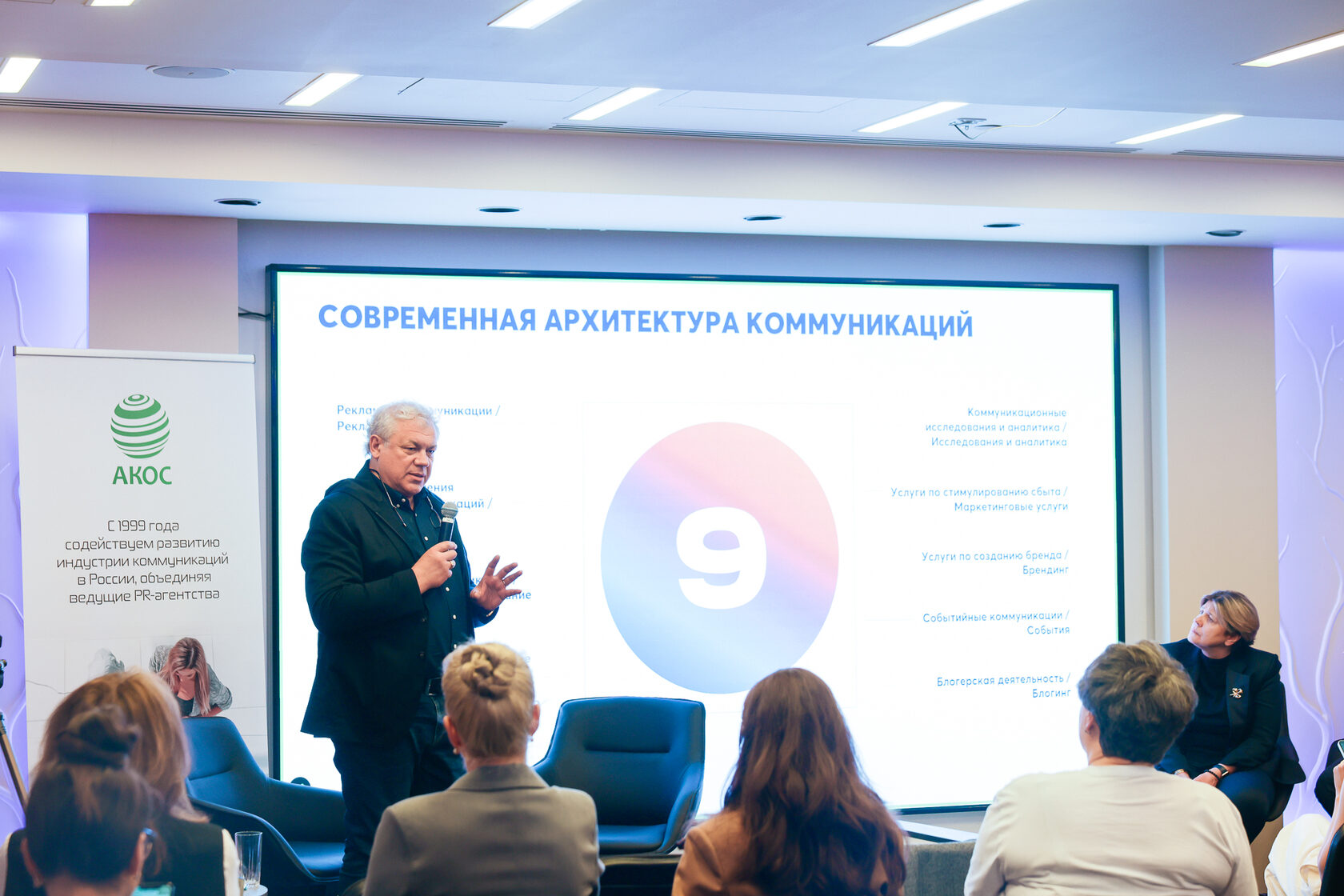
A special master class was integrated into the discussion lounge program. Its goal was to help participants better understand the specifics of creative industries — a category that now includes public relations following the entry into force in 2025 of the Federal Law "On the Development of Creative Industries in the Russian Federation." The master class was conducted by Igor M. Namakonov, General Director of the Federation of Creative Industries, producer, writer, creative diplomat, Executive Director of the RSPP Committee on Intellectual Property and Creative Industries, and industry head of the HSE bachelor's program "Management in Creative Industries."
Participants noted the special role of the communications environment as one of the cross-industry areas — alongside IT and design. Such positioning is important both for uniting the community within the creative industries context and for dialogue with the state.
"For now, this is a topic for discussion: statistics and additional factors are needed to substantiate it. Further development of this agenda is expected at the ACOS industry forum at the end of June this year," said Igor M. Namakonov.
Daria Levchenko, Head of External Communications at the Ministry of Economic Development of the Russian Federation and member of the ACOS Advisory Council, presented the comprehensive approach of the Strategy for the Development of Creative Industries through 2036 (currently pending approval). Comments on the industry proposals developed under the auspices of ACOS and submitted to the Ministry of Economic Development were provided by Maria Mordvinova, First Deputy of the HSE School of Communications, and Elena Gryzunova, Academic Supervisor of the Master's Program "Digital Communications and Product Analytics" at the HSE School of Communications.
Experts at the discussion lounge also had the opportunity to participate in two practical master classes: "Modern Approaches to PR Analytics" (Victoria Prilepskaya, Director of Development at Ex Libris, Head of the AKOS Working Group on Analytics and Digitalization of Communications) and "AI in Communications" (Dmitry Anashkin, founder of AI-focused companies, former CMO of Energizer).
"A great deal depends on communicators — on those who work in public relations," noted Viktor Chukov, Director of Corporate Communications Practice at MiP, in his closing remarks. "For government agencies, large companies, and media alike, we act as intermediaries between real information, data, positions, meanings, and the ways they are communicated. The function of communicators is not merely executive. We must speak with greater confidence that we help organizations become more recognizable and understandable, sell more, attract and retain people, and perform many other critically important strategic functions."
Based on the outcomes of the discussion and a survey of participants, a list of current needs and topics will be compiled and incorporated into the agenda of future discussions, industry forums, and expert work on relevant platforms.
Participants noted the special role of the communications environment as one of the cross-industry areas — alongside IT and design. Such positioning is important both for uniting the community within the creative industries context and for dialogue with the state.
"For now, this is a topic for discussion: statistics and additional factors are needed to substantiate it. Further development of this agenda is expected at the ACOS industry forum at the end of June this year," said Igor M. Namakonov.
Daria Levchenko, Head of External Communications at the Ministry of Economic Development of the Russian Federation and member of the ACOS Advisory Council, presented the comprehensive approach of the Strategy for the Development of Creative Industries through 2036 (currently pending approval). Comments on the industry proposals developed under the auspices of ACOS and submitted to the Ministry of Economic Development were provided by Maria Mordvinova, First Deputy of the HSE School of Communications, and Elena Gryzunova, Academic Supervisor of the Master's Program "Digital Communications and Product Analytics" at the HSE School of Communications.
Experts at the discussion lounge also had the opportunity to participate in two practical master classes: "Modern Approaches to PR Analytics" (Victoria Prilepskaya, Director of Development at Ex Libris, Head of the AKOS Working Group on Analytics and Digitalization of Communications) and "AI in Communications" (Dmitry Anashkin, founder of AI-focused companies, former CMO of Energizer).
"A great deal depends on communicators — on those who work in public relations," noted Viktor Chukov, Director of Corporate Communications Practice at MiP, in his closing remarks. "For government agencies, large companies, and media alike, we act as intermediaries between real information, data, positions, meanings, and the ways they are communicated. The function of communicators is not merely executive. We must speak with greater confidence that we help organizations become more recognizable and understandable, sell more, attract and retain people, and perform many other critically important strategic functions."
Based on the outcomes of the discussion and a survey of participants, a list of current needs and topics will be compiled and incorporated into the agenda of future discussions, industry forums, and expert work on relevant platforms.